
 Free Delivery within 40 miles
 Quality Gardening Products
 Rated Excellent By our Customers
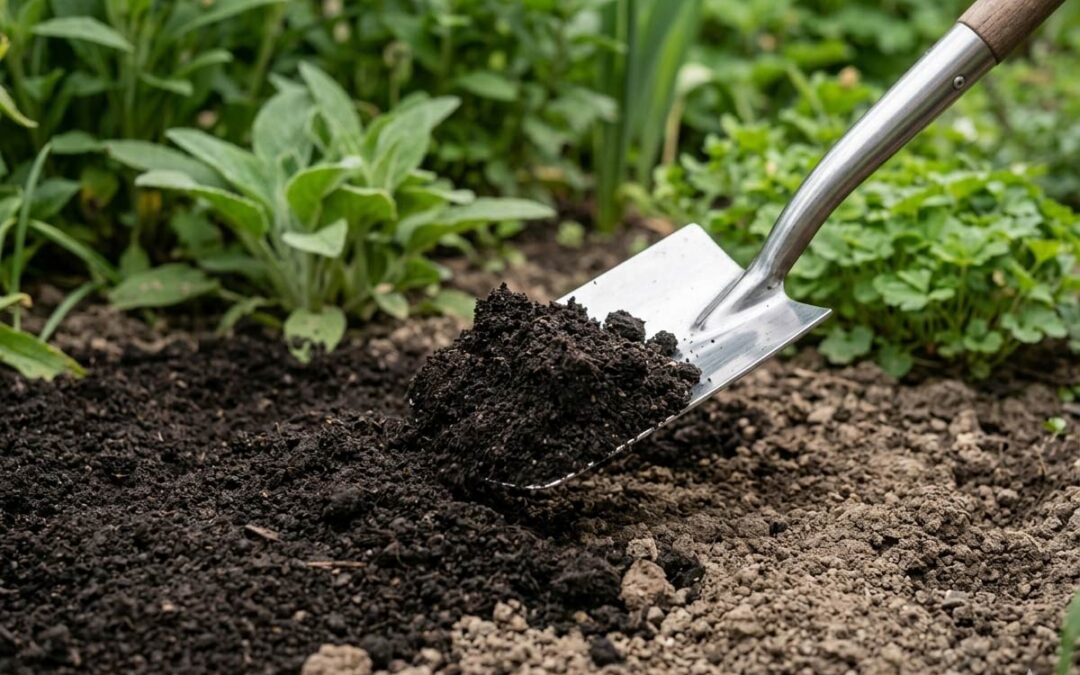
If you’ve shopped for compost in the last couple of years, you’ll have noticed the shelves looking different. Peat-free is now the dominant option in most garden centres, and the major retailers have already moved their own-brand ranges across. But the story behind that shift is messier than most gardeners realise, and 2026 has turned out to be a pivotal year for peat-free compost in the UK, just not for the reasons many of us expected.
Here’s what’s actually happening, why it matters, and what to look for when you’re buying compost this year.
The peat ban that hasn’t quite happened
The headline most gardeners remember is “peat is being banned.” That’s broadly true, but the detail is more complicated.
Back in 2022, the previous government announced its intention to ban retail sales of peat-based compost by the end of 2024, with a phased ban for professional growers following by 2026 and a full ban (with limited exemptions) by 2030. That timeline has slipped repeatedly. As of May 2026, no legislation has actually been passed. The current government has stated it will “legislate a ban on the sale of peat and peat-containing products when Parliamentary time allows”, a commitment reaffirmed in the December 2025 Environmental Improvement Plan, but the Private Members’ Bill that would force the issue keeps getting pushed back. Peatfreepartnership
In practical terms: there is no current legal ban on selling peat-based compost to home gardeners in England. There is widespread industry voluntary action, strong consumer preference, and a regulatory environment that everyone expects to tighten, but the law itself remains in limbo.
That sounds like bad news for peatlands, and in some ways it is. But it’s also created an interesting situation where the industry has effectively decided not to wait for legislation.
The industry has moved on without waiting
The most visible example is the Royal Horticultural Society. The RHS stopped selling peat-based compost back in 2019, and as of January 2026 has gone fully “no new peat” across all operations — including RHS Shows, Gardens and Retail. Every plant sold through their garden centres and online is now grown either entirely peat-free or in peat that entered the production cycle before the end of 2025. RHS
The major UK retailers, B&Q, Homebase, Wickes, moved their own-brand bagged compost to peat-free some time ago. Independent garden centres have largely followed. According to the RHS 2025 State of Gardening Report, around half of UK adult gardeners bought compost in 2024, and 70% of those bought peat-free. RHS
So while the legal picture is unsettled, the commercial reality has shifted decisively. If you’re buying compost in 2026, peat-free is now the default option in most places.
The “is peat-free actually any good?” problem
Here’s the part the industry doesn’t always like to talk about: for years, peat-free compost had a reputation problem. Some early formulations were inconsistent. Some dried out too quickly. Some had unpredictable nutrient profiles. Plenty of experienced gardeners tried peat-free in the 2010s, had a bad experience, and quietly went back to peat-based.
That reputation has lingered, even though the products themselves have improved enormously. The RHS report found that 56% of gardeners still have concerns about peat-free performance, which is a significant chunk of the buying public. RHS
The industry knows this, and is finally doing something about it. In March 2026, a major new initiative called Enrich the Earth received significant funding from the Esmée Fairbairn Foundation to train 12,000 garden centre staff, run citizen-science trials with amateur gardeners, and introduce an independently assessed Quality Mark for peat-free composts. The Quality Mark is the bit to watch. Once it lands, gardeners will have a clear, trustworthy signal that a peat-free compost has been tested against agreed performance standards, rather than having to trust the bag. Horticulture
Until that Quality Mark is widely available, the best existing benchmark for compost quality is PAS100, the publicly available specification for composted materials, independently tested and audited. PAS100 isn’t peat-free-specific (it applies to all composts), but it’s the recognised UK standard for compost quality and contamination, and it’s been in place for years. When you see PAS100 on a bag or bulk product, you’re looking at a compost that has been tested to a controlled specification.
Why peat-free still matters, even without legislation
It’s tempting, given the regulatory drift, to assume the urgency has gone out of this. It hasn’t.
Peatlands are the most efficient carbon store on land. The RHS describes them as “invaluable in the fight against climate change”, they also provide unique habitats for wildlife and play a key role in flood mitigation. Extracting peat for compost releases stored carbon, destroys habitat, and damages a landscape that takes thousands of years to form. None of that has changed just because Parliament is busy with other things. RHSRHS
The case for choosing peat-free in 2026 is essentially the same as it was in 2022, just with one addition: the alternatives are now genuinely good. The performance gap has closed. Well-formulated peat-free composts, particularly those made from screened, composted organic material to PAS100 standards, perform comparably with peat-based products for most home garden applications.
The wider shift towards “soil-first” gardening
There’s another trend worth noting that goes beyond just the peat question. UK garden writing in 2026 has converged on a phrase: soil-first gardening. The idea is that healthy plants follow from healthy soil, not the other way round, and the most valuable thing a gardener can do is build long-term soil structure and fertility rather than feeding individual plants from the top down.
This is closely linked to the rise of regenerative and no-dig gardening, approaches where compost and mulch do most of the heavy lifting. Compost in this model isn’t just a planting medium for new beds, but an ongoing input that’s added to the soil surface year on year, gradually transforming heavy clay into workable loam and giving sandy soil the body it lacks.
If that approach interests you, your compost choice matters more than ever. A high-quality, screened, peat-free compost added once a year to borders, raised beds and vegetable plots will, over a few seasons, fundamentally change the character of your soil. That’s not marketing, it’s just what happens when you consistently add organic matter to a system.
What to look for when buying peat-free compost in 2026
A few practical signals that distinguish a quality peat-free compost from a mediocre one:
- PAS100 certification – the most reliable existing quality marker until the new Quality Mark rolls out. Tested, audited, controlled
- Clear ingredient information – good peat-free composts tell you what’s in them (composted green waste, bark, coir, wood fibre, etc.). Vague or evasive labelling is a red flag
- Consistent dark colour and fine, uniform texture – quality peat-free should look like quality compost: rich, dark, screened, with no visible plastic, glass or large woody debris
- Reputable supplier with a stable formulation – peat-free composts that change recipe season to season are harder to plan around. Suppliers who’ve been making the same product consistently are easier to trust
- Appropriate for your use case – multipurpose compost is fine for most general garden use, but ericaceous plants, seeds and specialist planting may need specific formulations
Where Richardson Garden Supplies fits in
Our Organic Multipurpose Compost is 100% peat-free, PAS100 certified, and made from screened organic material. We’ve been supplying it to home gardeners, allotment growers and landscapers across the region for years, and we’re confident it stands up alongside any peat-based product for the kinds of jobs most gardeners actually do: improving soil, planting borders, filling raised beds, and getting new turf established.
If you’ve held off on switching to peat-free because of past performance concerns, 2026 is a good year to take another look. The products have improved, the standards are tightening, and the case for keeping carbon locked in peatlands rather than scattered across our gardens has never been stronger.